


How do we move from smart buildings to smart cities? That is one of the key questions Jonas Tannerstad, Head of technical installations (Electricity & Automation) at ÖBO, will explore during Innovation Day.
With more than 20 years of experience in digitalisation, energy efficiency and data-driven property management, Jonas has helped develop an approach where individual buildings become not only smarter, but also able to interact with one another and with other parts of a city’s infrastructure.
You will be speaking about “From Building Automation to City Automation”. What does that mean?
– It’s really about looking at technology in a different way. Instead of optimising each building individually, we create a shared technical foundation that allows buildings to communicate with each other and with other parts of the city.
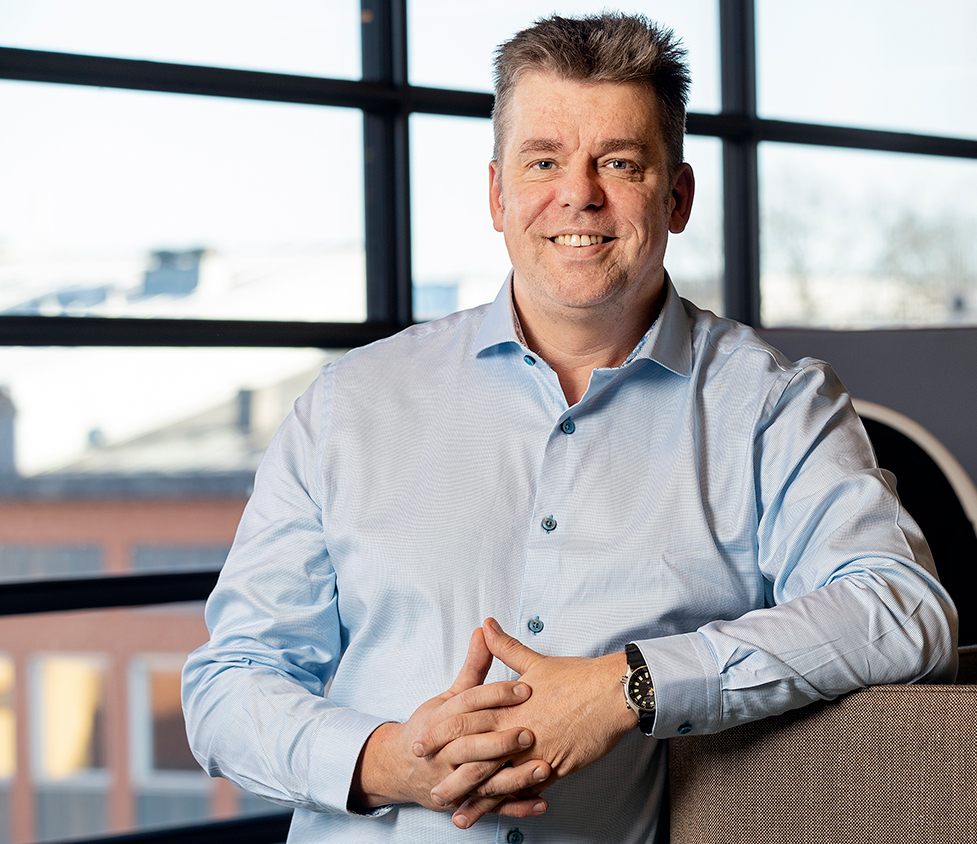
He compares it to a smartphone platform.
– The phone itself is just the platform. The real value comes from all the apps that can be built on top of it. In the same way, we need open technical platforms in our buildings. That creates the conditions for new innovations without having to rebuild everything from scratch.
This is an approach ÖBO has been developing since 2004.
– We know it works in practice. To me, this is much more about a shift in mindset than about new technology.
Many buildings are already connected today. What is needed to take the next step – from a smart building to a smart city?
– Many property owners focus on the individual project and try to find the cheapest solution in the short term. The problem is that these decisions can become more expensive over time because they lock you into technologies that are difficult to develop further.
Instead, he believes the industry needs to take a longer-term perspective.
– When it’s time to replace a building’s control system, you’re faced with a choice. You can buy more of the same legacy technology, or you can invest in an open platform that enables future innovation. In my view, the risk of continuing as before is often greater than the risk of thinking differently.
Örebro has become something of a role model in this field. What lessons do you hope other cities and municipalities will take away?
– We’ve shown that this approach works across a large property portfolio and that it can create collaboration between different municipal organisations. It’s not only about residential buildings, but also about wastewater treatment plants and other critical infrastructure.
He emphasises that the transition is already underway.
– Several major property owners have already started transforming their portfolios. The important thing is to show that no one has to reinvent the wheel. Proven solutions already exist, and there’s a great deal of experience to build on.
Looking five or ten years ahead, how do you hope these solutions will be used in more cities?
– I hope we’ve created a common foundation that makes developing new functionality as easy as creating a new app for a smartphone.
That would make it possible to optimise many more parts of a city’s energy system.
– We know there’s enormous untapped potential in the way buildings and technical facilities are operated today. At the same time, it’s becoming increasingly difficult to recruit skilled building operators. Smarter systems can give the people we have better tools and free up time for the work that creates the greatest value.
What do you hope participants will take away from your presentation at Innovation Day?
– Above all, I hope people will realise that there is another way of doing things.
By choosing open platforms, buildings, software and other parts of a city’s infrastructure can work together much more effectively. That makes the entire system both smarter and more resilient.
– No one should feel they’re venturing into uncharted territory. We’ve been working this way for more than 20 years. There’s no need to reinvent the wheel—we can build on experience that already exists.