


Bring a garment – leave with a new idea
What happens to the clothes that end up forgotten at the back of the wardrobe? Are they really past their prime – or are they simply waiting for a second chance?
At Innovation Day, Stina Löving and Mikaela de Verdier from Slow Fashion Hub invite participants to Trash or Treasure? – an interactive workshop where old favourites, impulse buys and forgotten garments get a fresh perspective.
Bring a garment you’d like to wear again and receive personal guidance. Should it be repaired, sold, donated – or perhaps transformed into something completely new?
Ahead of Innovation Day, Stina explains why our wardrobes have a bigger role to play in the sustainability transition than many people realise.
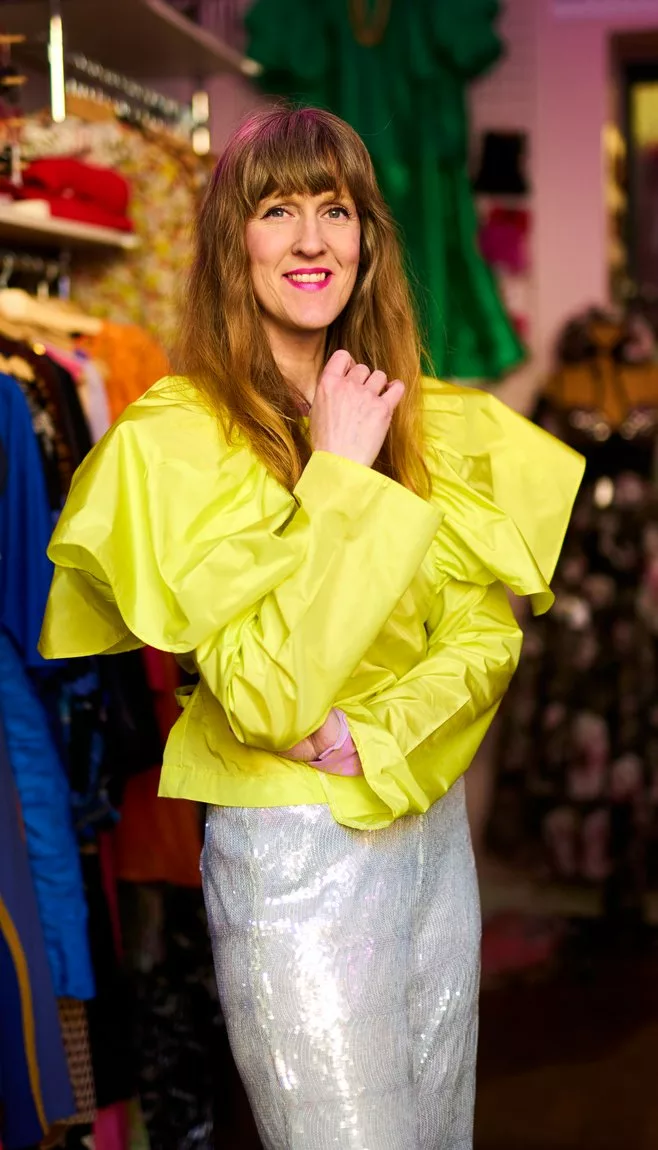
You’ve called the workshop “Trash or Treasure?”. What do you hope participants will discover?
– Above all, I hope they’ll start seeing what they already own in a new light. Many garments have more value than we realise – sometimes financially, but more often because they still have plenty of life left in them.
Together with vintage expert Mikaela de Verdier, Stina will help participants look at their clothes from a different perspective.
– We’ll talk about everything from spotting hidden vintage gems to simple tricks that can make a big difference. Sometimes it’s as easy as sewing on a button, hemming a pair of trousers or turning old jeans into shorts. We often overlook the simplest solutions.
Stina will also showcase examples of redesign and creative upcycling that can completely transform a garment.
The idea is simple:
The most sustainable garment is the one already in your closet. Wear what you have, more often and for longer.
Many of us have clothes hanging in our wardrobes that we never wear. Why is it so difficult to either let them go or start using them again?
– Clothes are emotional. We attach memories to them, which makes decisions harder than we think. Should I sell it, donate it or keep it? Many people postpone the decision, and the garment simply stays in the wardrobe.
She believes it’s often easier to buy something new than to take care of what we already own.
– Our wardrobes are about much more than clothes. They reflect how we think and how we relate to the things we own.
What can a single garment tell us about the way we consume fashion today?
– Take jeans, for example. They’ve been part of our wardrobes for generations and are one of the most widely used garments in the world. Yet today we buy brand-new jeans that are already ripped or distressed. It’s a rather strange phenomenon and says a lot about how our relationship with clothing has changed.
What do you hope participants will bring to the workshop?
– Bring a garment you’d love to wear again. It doesn’t have to be anything special. Maybe it’s a favourite blazer that’s been hanging untouched, a white shirt with a stubborn stain, a briefcase that needs a little care or a pair of jeans that no longer feels quite right.
During the workshop, participants will explore different possibilities for giving those items a new future.
– Sometimes the answer is to repair it, sometimes to sell it or pass it on. You’ll also get inspiration from seeing what other participants have brought with them.
Stina hopes the workshop will also encourage people to rethink how they value clothing.
– We rarely hesitate to repair a car or service a bicycle, but when it comes to clothes we often compare the cost of a tailor with the price of buying something new. Perhaps it’s time to place greater value on both craftsmanship and the resources already invested in the clothes we own.
What do you hope participants will take home – besides their garment?
– I hope they leave with fresh ideas and a new perspective on their wardrobe. Often it takes much less than we think to make a garment a favourite again.
Which garment would you bring yourself – and why?
– I’d probably bring a denim shirt with a large coffee stain or a pair of leather trousers that no longer fit. They’re both pieces I’d love to wear again – they just need a second chance.