


What if waste heat became
tomorrow's food?
Industrial facilities generate vast amounts of excess heat every day. What if that energy could be captured and used to grow fresh, locally produced food instead of being wasted?
That is exactly what RegEnergy Frövi has demonstrated. By transforming industrial waste heat into a resource for greenhouse food production, the company shows how energy, industry and agriculture can work together to strengthen both local food security and the green transition.
At Innovation Day, Ingrid Schuster, CEO of RegEnergy Frövi AB, will share how industrial symbiosis can create value for businesses, municipalities and local communities – and why collaboration is the key to scaling these solutions.
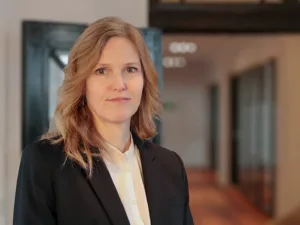 RegEnergy Frövi shows how waste heat can become a resource for local food production. How would you describe your vision?
– By utilizing waste heat to grow food, we can increase self-sufficiency and contribute to a more resilient society in Sweden and across the Nordic region.
Frövi is often highlighted as a successful example of industrial symbiosis. What makes the model work – and why can it be replicated elsewhere?
– The technology itself is simple and already widely available. The real success lies in the collaboration between all stakeholders and in adapting the solution to the local context. That is what makes the model possible to replicate in many different places.
Many municipalities want to become more circular and resource-efficient. What needs to happen for more of them to adopt solutions like this?
– We need to start looking at waste differently and see it as a resource. We also need the courage to try new approaches, but above all we need stronger collaboration between the public and private sectors.
Many people see the green transition primarily as a technical challenge. Your project connects energy, industry and food production. What do we miss when we look at these systems separately?
– Each system on its own is relatively simple. But when we connect them, we create both new opportunities and new dependencies. We often focus more on the risks than on the opportunities.
If more municipalities want to be inspired by Frövi, where should they start?
– Prepare the physical prerequisites, such as land for development and access to electricity. Create an environment where local businesses collaborate, involve the local community — and come and visit Frövi to see how we did it.
What do you hope participants will take away from your session at Innovation Day?
– Waste is a resource. Be brave, build broad collaborations — and eat locally produced food.