


What if the energy transition
started with people?
Cities around the world are investing heavily in renewable energy and climate action. But what if the greatest opportunity isn’t just about new technology – but about giving people a stake in the transition?
That is the question Agamemnon Otero, MBE, Founder and CEO of Energy Garden, has spent more than a decade exploring.
At Innovation Day on 1 October, he will share how Energy Garden has transformed renewable energy projects into community-owned assets that not only generate clean electricity, but also support biodiversity, education, greener public spaces and stronger local communities.
Ahead of Innovation Day, he explains why the energy transition must start with people – not technology.
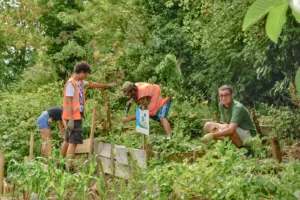
Energy Garden combines renewable energy, biodiversity, education and community ownership. What inspired you to create that model?
– It really grew out of a simple observation: the challenges facing our cities don’t arrive separately, yet we often try to solve them separately.
A neighbourhood may struggle with unemployment, lack of green space, biodiversity loss, fuel poverty and the transition away from fossil fuels – all at the same time.
– I became interested in whether we could build infrastructure that addressed several of those challenges at once.
That idea became Energy Garden’s guiding principle:
People. Place. Power. Together creating impact.
Many cities focus on technology when talking about the energy transition. You’ve often argued that people should come first. Why?
– Because the transition isn’t ultimately about technology – it’s about people.
Solar panels, batteries and heat pumps are simply tools, he explains.
– The real questions are: who owns the infrastructure, who benefits from it, and where does the value it creates go?
Community ownership gives residents a genuine stake in the transition.
– Instead of the energy system simply happening around them, people can participate in it, invest in it and benefit from the value it creates.
Energy Garden connects renewable energy with biodiversity, education and public spaces. Why do those issues belong together?
– Because they’re already connected in people’s everyday lives.
Energy Garden uses renewable energy as a long-term source of income rather than an isolated climate project.
– The revenue generated by the infrastructure can support youth training, biodiversity, education, community growing and better public spaces.
In that way, the infrastructure becomes more than an energy asset.
– It becomes the financial backbone of the community.
Many municipalities struggle to move from pilot projects to long-term implementation. What advice would you give them?
– Don’t design another pilot that depends on another grant to survive.
Instead, municipalities should ask themselves three questions from the very beginning: “Will this still be here in twenty years? Who will own it? And how will it pay for itself?”
– Grants can help something begin. Productive assets can help it endure.
What role can municipalities play?
According to Agamemnon, local governments already control many of the resources communities need.
– Municipalities have land, buildings, rooftops, planning powers, procurement and long-term energy demand.
Their role is not always to deliver every solution themselves.
– Sometimes the most powerful thing they can do is simply open the door, provide access to assets, help reduce early risk and create the conditions for communities and investors to build something together.
If every city in Europe adopted one lesson from Energy Garden, what would it be?
His answer is immediate.
– Build climate infrastructure that creates intergenerational community wealth, not just clean energy.
As Europe invests billions in transforming cities, he believes there is a unique opportunity to ensure some of that value remains where it is created.
– The infrastructure should strengthen communities for generations, not simply generate electricity.
What do you hope participants take away from your session at Innovation Day?
– I hope they leave with one simple idea: put community and nature at the table from the beginning.
He believes future infrastructure decisions should not only involve governments, investors and businesses.
– Community deserves a seat at the table. Nature deserves a seat at the table.
That, he says, is the real opportunity.
– I don’t want Stockholm to simply copy Energy Garden from London. Instead, I hope we can ask a bigger question together:
How do we build the next generation of city infrastructure so that community and nature remain part of the decision-making – and some of the value created stays within the community for generations to come?